
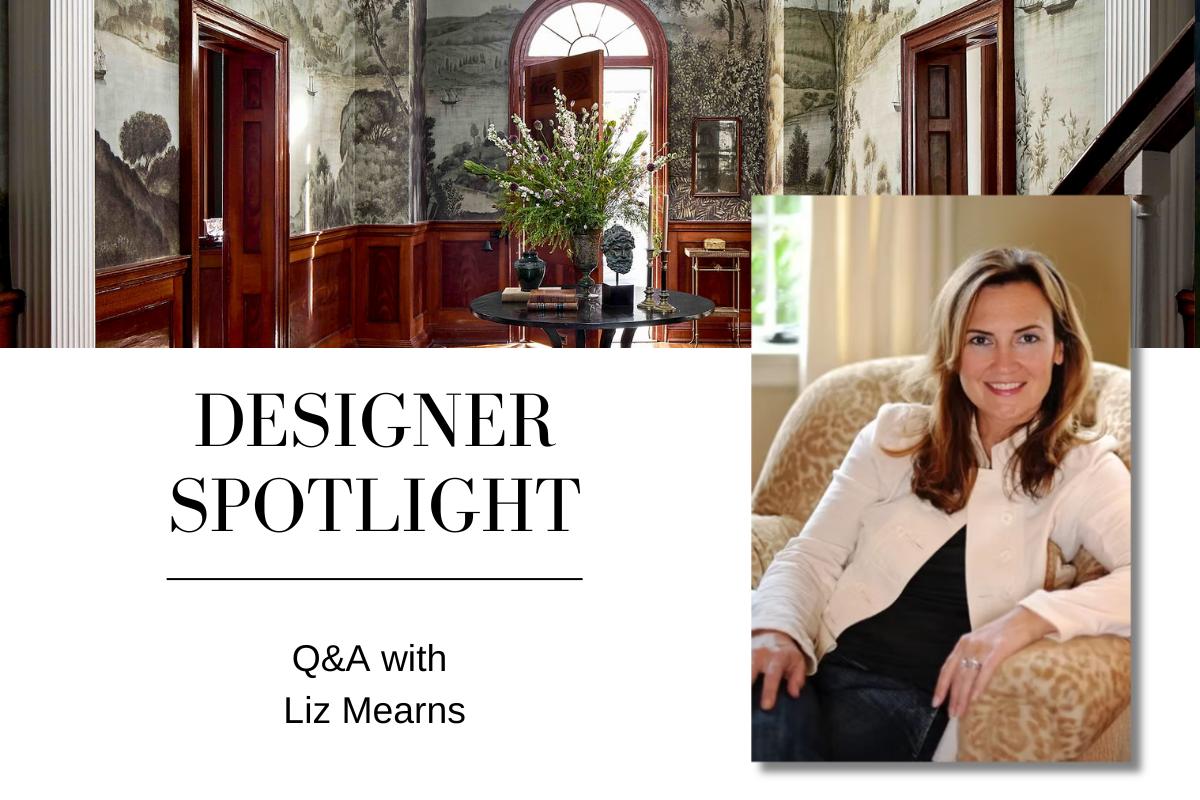

With over two decades of experience, Liz Mearns brings a deeply personal and collaborative approach to interior design, shaped by a rich family legacy and global influences. Raised among three generations of designers, she learned early on that great design is about how a home feels as much as how it looks. Her work blends elegance with lived-in warmth, drawing from time spent abroad, hands-on home renovations, and a love for layered, collected interiors. As the founder of Washington D.C.-based Imagine Design, she specializes in creating homes that are both effortlessly beautiful and authentically personal.
“Your home should tell your story.”
-Liz Mearns
With an impressive talent for mixing styles with effortless elegance, Liz Mearns brings soulfulness to every space she designs. We had the pleasure of asking Liz some questions about her approach to layering old and new, why antiques matter, and how to create a home that feels truly personal.
How would you describe your overall design aesthetic, and how has it evolved over time?
I’d describe my aesthetic as timeless and collected. I’m drawn to interiors that feel warm, layered, and grounded—where nothing feels overly decorated but everything has a reason for being there. Over the years, my style has definitely evolved. I’ve learned to edit more and let a few strong pieces lead the conversation instead of including all the pretty things. The goal is always to create something that feels natural, like it’s been collected over time, even when we’ve designed it from scratch in a matter of months.

What’s your approach to mixing styles within a single space? Any key principles you follow?
For me, it starts with cohesion. If I’m mixing styles, I’m looking for threads that tie things together—tone, texture, color, or scale. I might pair a traditional armchair with a modern coffee table, but I’m thinking about proportion and how the finishes relate. It’s not about contrast for the sake of it—it’s about creating tension that feels interesting and balanced. I always ask: Does the room feel grounded? Is it telling one clear story, even if the pieces come from different eras?

How do you incorporate antiques into more modern or transitional interiors?
Antiques bring depth and character. Even one piece with age and wear can shift the whole mood of a room. I don’t use them to be precious—or worse, pretentious. I want them to feel lived-in and approachable. A chest, a mirror, a small table with patina—when paired with cleaner-lined upholstery or modern art, the room starts to feel layered and real. I almost always feel that a space without something vintage or antique is missing a little soul.

Can you share a favorite project where you successfully blended old and new pieces?
There’s a home in Old Town Alexandria that stands out. The architecture had so much character—tall ceilings, original moldings, and beautiful light. We brought in clean-lined upholstery and lighter finishes to soften the formality but kept in some age and patina. A little bistro table by the window, antique chairs with new upholstery, modern lighting—it was about finding the right balance. The result felt refined but still really comfortable.

Are there any Sarreid pieces you’ve used that helped tie together contrasting styles?
Yes—the Nader Persian Burnt Brown Sideboard is one I’ve actually used in several projects. I love its oversized scale and that rustic, antique finish. It has this strong, grounded presence without feeling heavy or formal. I’ve used it in transitional spaces where it helped bridge clean, contemporary lines with older architectural elements. It just works—quietly holding the room together while providing a large amount of storage.

Another favorite is the Classic Chinese Coffee Table in vintage pine. I’ve used it in several projects, including my own home. When a seating area is large enough to include two sofas and chairs, a generously sized coffee table can really anchor the space, and at 57 inches square, this one does exactly that. I also love the rustic finish. It’s the kind of piece that only gets better with age, and it is sturdy enough to hold up beautifully in family homes.

Liz Mearns’ work is a testament to the power of thoughtful design—rooted in history, shaped by experience, and always centered on the people who call a space home. At Sarreid Ltd., we’re proud to partner with designers like Liz who value craftsmanship, character, and the art of blending styles to create truly timeless interiors.
Leave a Reply