
Hello, my name is Chris. I’m the Director of Creative Media here at Sarreid Ltd. We’re starting a new segment here on the blog (as you’ve undoubtedly noticed, (duh!) called Chris’ Corner. It all began because I write internal documents to our constituents that seem to entertain. I’ll make you exactly two promises in this Corner. One, I don’t know furniture the way that I’m sure 100% of you reading this article do, and over the coming months, that will become indubitably obvious.
And two, that you will find these articles light-hearted, sometimes humorous, sometimes informative, sometimes emotional, sometimes trivial, sometimes personal, and almost always an irreverent break from the industry norm. With that said, I cordially and humbly invite you to Chris’ Corner!
The Color Effect
You’ve all heard the saying, “The eyes eat before the mouth.” The appearance of food, especially its color, certainly affects how we perceive its taste. But can your eyes actually change the way you taste something?
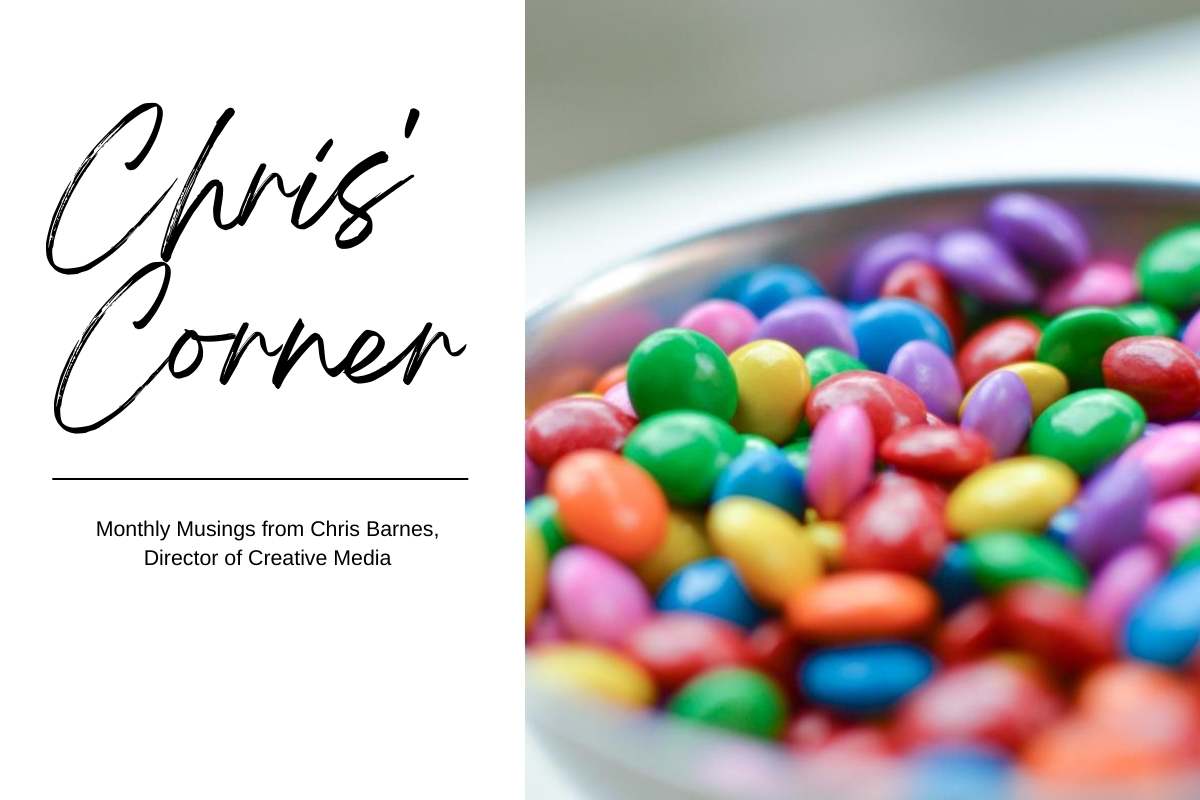
We recently had an interesting argument/discussion in the office about the “flavor” of the different seasonal M&Ms. A coworker suggested that the Easter pastels “were the best!“. While another claimed the Halloween colors “were so much better.” I just stared in stunned disbelief, knowing that they tasted exactly the same – a point these two individuals were equally incredulous as to how I could possibly think such a thing.


So, I did some research because this fascinated me.
Some studies have shown that heightening the color of food or drink enhances the intensity of the taste. For instance, in a 1982 study, scientists gave participants drinks containing different amounts of red food dye and sugar. They found that people rated drinks sweeter when the drinks contained more dye, even when they contained less sugar.

Further digging proved that color can indeed affect taste, although it’s often more about perception and psychological associations rather than direct physiological effects. Research has shown that people associate certain colors with specific flavors or tastes due to learned experiences, cultural influences, and even evolutionary factors.
For example, as stated above, many people associate the color red with sweetness or ripeness, which may make them perceive red-colored foods or drinks as sweeter than they are. Similarly, the color yellow is often associated with citrus flavors, so a yellow drink might be perceived as tasting more lemony or tangy.
Furthermore, the presentation of food, including its color, can influence expectations and anticipation, which in turn can affect how we perceive its taste. This phenomenon is often referred to as “sensory-specific satiety,” where repeated exposure to a particular sensory cue (such as color) can decrease the perceived intensity of a specific flavor.

Here are a few ways in which color can affect how we perceive taste:
- Visual Expectations: When we see food, our brains start forming expectations about its taste based on color. For example, we might expect a bright red apple to be sweeter than a green one, even if they’re the same variety.
- Psychological Associations: Colors often have psychological associations that can influence our perception of taste. For example, warm colors like red and orange might be associated with sweetness or spiciness, while cool colors like blue might be associated with freshness or calmness.
- Presentation: The way food is presented, including its color, can affect how appealing it looks and, therefore, how much we enjoy it. Vibrant, appetizing colors can make food seem more enticing and flavorful. i.e., Eat with your eyes.
- Cultural Influences: Cultural factors can also influence how color affects taste perception. Different cultures may have different associations between color and taste preferences based on traditional foods and customs.
Overall, while color alone may not directly alter the chemical composition of food or drink (M&Ms has admitted this for years,) it can play a significant role in shaping our perception of taste and flavor. It’s important to remember that individual preferences and experiences also play a significant role. Ultimately, taste is a complex combination of factors that goes beyond just what meets the eye.

Furthermore, the appearance of food, including its color, can impact expectations about its flavor and quality. Studies have demonstrated that people tend to perceive foods that are brightly colored as more flavorful and appealing than those with dull or muted colors, even if the actual taste remains unchanged. (The Easter pastel M&Ms, for example)
Additionally, packaging and presentation play a significant role in shaping taste perceptions. Beverages served in colored glasses or containers may be perceived as tasting different from identical beverages served in clear glasses due to the influence of the container’s color on taste perception.
So, the final conclusion is this. Does color affect taste? No, but also yes. If blindfolded, you couldn’t tell one M&M from another, BUT, if you see the M&M, its color may affect its taste – to you.
Speaking of color and “taste,” Have you explored Sarreid’s new Shagreen Fashion Colors? You ought to check it out! See how the colors affect your “taste.”
Until next time…
Leave a Reply